Showing posts with label Deep Sky. Show all posts

Saturday, July 5, 2025

Deep Sky Objects | 07.05.2025

 Deep Sky Objects | 07.05.2025


The Iris Nebula (NGC 7023), a delicate blue reflection nebula lit by starlight scattered through dust in Cepheus.
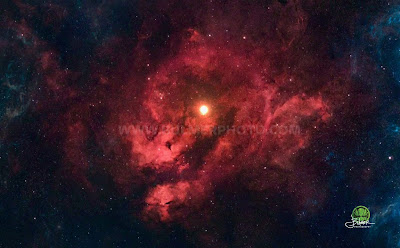


The Sadr Region (IC 1318), a glowing red expanse of hydrogen gas surrounding the bright star Sadr in Cygnus.


The Veil Nebula (NGC 6960), a filament of an ancient supernova remnant known as the Witch’s Broom, its gossamer strands stretching across the Cygnus sky.

© 2025 John Bulmer Photography, John Bulmer Media, and Nor'easter Films
www.bulmerphotography.com
www.johnbulmermedia.com
www.noreasterfilms.com
All Rights Reserved


Monday, March 10, 2025

Jupiter and Her Moons | 03.10.2025


 Jupiter and Her Moons | 03.10.2025

Jupiter and its four largest moons—Io, Europa, Ganymede, and Callisto—shine in tonight’s sky, 410 million miles from Earth.

© 2025 John Bulmer Photography, John Bulmer Media, and Nor'easter Films
www.bulmerphotography.com
www.johnbulmermedia.com
www.noreasterfilms.com
All Rights Reserved

Saturday, February 22, 2025

Orion Nebula | 02.21.2025


 Orion Nebula | 02.21.2025

The Orion Nebula is never a disappointment—a vast stellar nursery where new stars are born, glowing with cosmic fire 1,300 light-years away. In mythology, the nebula lies within the sword of Orion, the mighty hunter of Greek legend, immortalized in the stars by Zeus. Some interpretations even suggest the nebula represents where celestial bodies emerge from the cosmic forge, just as Orion himself was a son of the gods, shaped by divine hands.

© 2025 John Bulmer Photography, John Bulmer Media, and Nor'easter Films
www.bulmerphotography.com
www.johnbulmermedia.com
www.noreasterfilms.com
All Rights Reserved

Wednesday, February 5, 2025

Rosette Nebula (Caldwell 49) | 02.05.2025


Rosette Nebula (Caldwell 49) | 02.05.2025

This is a 90-minute telescopic exposure of the Rosette Nebula (Caldwell 49): Located about 5,200 light-years away in the constellation Monoceros, the Rosette Nebula spans 130 light-years across. This vast emission nebula glows red from ionized hydrogen, illuminated by the young, hot stars of the central NGC 2244 cluster. Dense molecular gas and dust within the nebula hint at regions of future star formation. A long exposure captures the nebula’s intricate structure, including bright filaments, dust lanes, and the radiant cluster at its core.

The night sky is amazing.

© 2025 John Bulmer Photography, John Bulmer Media, and Nor'easter Films
www.bulmerphotography.com
www.johnbulmermedia.com
www.noreasterfilms.com
All Rights Reserved