Showing posts with label Astrophotography. Show all posts

Saturday, July 5, 2025

Deep Sky Objects | 07.05.2025

 Deep Sky Objects | 07.05.2025


The Iris Nebula (NGC 7023), a delicate blue reflection nebula lit by starlight scattered through dust in Cepheus.
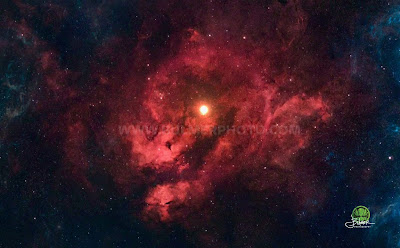


The Sadr Region (IC 1318), a glowing red expanse of hydrogen gas surrounding the bright star Sadr in Cygnus.


The Veil Nebula (NGC 6960), a filament of an ancient supernova remnant known as the Witch’s Broom, its gossamer strands stretching across the Cygnus sky.

© 2025 John Bulmer Photography, John Bulmer Media, and Nor'easter Films
www.bulmerphotography.com
www.johnbulmermedia.com
www.noreasterfilms.com
All Rights Reserved


Saturday, February 22, 2025

Orion Nebula | 02.21.2025


 Orion Nebula | 02.21.2025

The Orion Nebula is never a disappointment—a vast stellar nursery where new stars are born, glowing with cosmic fire 1,300 light-years away. In mythology, the nebula lies within the sword of Orion, the mighty hunter of Greek legend, immortalized in the stars by Zeus. Some interpretations even suggest the nebula represents where celestial bodies emerge from the cosmic forge, just as Orion himself was a son of the gods, shaped by divine hands.

© 2025 John Bulmer Photography, John Bulmer Media, and Nor'easter Films
www.bulmerphotography.com
www.johnbulmermedia.com
www.noreasterfilms.com
All Rights Reserved

Saturday, January 25, 2025

The Horsehead Nebula IC-434 | 01.24.2025


The Horsehead Nebula IC-434  | 01.24.2025

The Horsehead Nebula has always been one of my favorites, and tonight’s clear skies with only 21% moonlight made it a perfect opportunity to capture its delicate beauty. Located in Orion, near the star Alnitak, the easternmost star in Orion’s Belt, this dark cloud of gas and dust stands out dramatically against the glowing red hydrogen of IC-434, the emission nebula behind it.

At about 1,500 light-years away, the Horsehead Nebula is part of the Orion Molecular Cloud Complex, a vast region of space where stars are being born. Its distinct shape—resembling a horse’s head—is caused by dense clouds of interstellar dust blocking the light behind it. The surrounding reddish glow comes from hydrogen gas energized by nearby stars, like Sigma Orionis.

Winter skies are perfect for this kind of astrophotography—stable, crisp, and free from heat distortion.

© 2025 John Bulmer Photography, John Bulmer Media, and Nor'easter Films
www.bulmerphotography.com
www.johnbulmermedia.com
www.noreasterfilms.com
All Rights Reserved

Wednesday, January 22, 2025

Deep Sky Photography | 01.21.2025

Jupiter and Its Moons 

The Pac-Man Nebula 

Deep Sky Photography | 01.21.2025
Jupiter and Its Moons Jupiter and the Pac-Man Nebula 

Jupiter and Its Moons Jupiter accompanied by its four largest moons: Io, Europa, Ganymede, and Callisto. These tiny points of light lined up near the gas giant, each a fascinating world in its own right, visible even from millions of miles away.

The Pac-Man Nebula (NGC 281)
also known as NGC 281, has a unique shape, living up to its playful nickname. Glowing faintly in hues of orange and pink, it’s a stunning star-forming region surrounded by dark dust and intricate patterns carved by stellar winds and radiation.

© 2025 John Bulmer Photography, John Bulmer Media, and Nor'easter Films
www.bulmerphotography.com
www.johnbulmermedia.com
www.noreasterfilms.com
All Rights Reserved

Tuesday, January 21, 2025

Flaming Star Nebula and Orion Nebula | 01.20.2025

Flaming Star Nebula and Orion Nebula | 01.20.2025

Tonight’s clear sky and cold air provide the perfect conditions for deep-space photography. Winter’s crisp atmosphere, with lower humidity and less atmospheric turbulence, enhances visibility, allowing for sharper and more detailed images of the stars and distant galaxies.

Flaming Star Nebula

Orion Nebula 

The magenta image is IC 405, better known as the Flaming Star Nebula. It’s about 1,500 light-years away in the constellation Auriga and gets its fiery appearance from the radiation of a nearby “runaway star” called AE Aurigae. This star was flung out of the Orion region millions of years ago and now lights up the surrounding hydrogen gas, creating that striking magenta glow.

The second image, glowing gold and green, is the Orion Nebula—one of the most famous sights in the night sky. Sitting about 1,350 light-years away, it’s a bustling nursery where stars are born, surrounded by swirling clouds of gas and dust. The colors come from ionized gases lit up by young, massive stars, creating a vibrant, otherworldly masterpiece.

© 2025 John Bulmer Photography, John Bulmer Media, and Nor'easter Films
www.bulmerphotography.com
www.johnbulmermedia.com
www.noreasterfilms.com
All Rights Reserved

Thursday, January 16, 2025

M33 Triangulum Galaxy | 01.15.2025


M33 Triangulum Galaxy | 01.15.2025

Note: The Triangulum Galaxy (M33 or Messier 33) is a stunning spiral galaxy located about 3 million light-years away in the constellation Triangulum. It is one of the most distant objects visible to the naked eye under ideal dark-sky conditions. Measuring approximately 60,000 light-years in diameter, M33 is smaller than the Milky Way but still a significant galaxy with a mass estimated at 10–40 billion solar masses. With an apparent magnitude of 5.7, the galaxy is faint but can be seen without a telescope in excellent viewing conditions.

© 2025 John Bulmer Photography, John Bulmer Media, and Nor'easter Films
www.bulmerphotography.com
www.johnbulmermedia.com
www.noreasterfilms.com
All Rights Reserved

Wednesday, January 15, 2025

Andromeda | 01.14.2025


Andromeda | 01.14.2025
Note: If Andromeda was brighter in the night sky, it would appear six times larger than our moon.

© 2025 John Bulmer Photography, John Bulmer Media, and Nor'easter Films
www.bulmerphotography.com
www.johnbulmermedia.com
www.noreasterfilms.com
All Rights Reserved

M42 Orion Nebula | 01.13.2025


M42 Orion Nebula | 01.13.2025

Believe it or not, we’ve had cloudy skies for almost a month at night. Tonight, the sky finally cleared, so I took the opportunity for some deep space photography. This is what the Orion Nebula (M42) looks like tonight, captured from my backyard at about 6:30.

The Orion Nebula, also known as M42, is a massive cloud of gas and dust in the constellation Orion, where thousands of stars are born. It’s the closest large star-forming region to Earth, located 1,300–1,500 light-years away. Visible to the naked eye, it appears as the middle “star” in Orion’s Belt and as part of the sword hanging below the three belt stars. Best observed in January, it’s a stunning feature of the winter sky, easily spotted under moderately dark skies.

© 2025 John Bulmer Photography, John Bulmer Media, and Nor'easter Films
www.bulmerphotography.com
www.johnbulmermedia.com
www.noreasterfilms.com
All Rights Reserved   


Sunday, October 20, 2024

Comet Tsuchinshan-ATLAS Final Image | 10.19.2024


Comet Tsuchinshan-ATLAS Final Image | 10.19.2024

Stacked multiple images of Comet Tsuchinshan-ATLAS, captured through both a traditional camera and a telescope. By layering these images, I enhanced the detail and dynamic range, revealing the comet’s faint tail and bright core with clarity that a single exposure could not achieve. This technique brings out the intricate structure and beauty of the comet as it fades from view in the western sky.

© 2024 John Bulmer Photography, John Bulmer Media, and Nor'easter Films
www.bulmerphotography.com
www.johnbulmermedia.com
www.noreasterfilms.com
All Rights Reserved

Tuesday, July 11, 2023

Blue + Gold | 07.11.2023


Blue + Gold | 07.11.2023
Grafton Lakes State Park, Grafton, New York 

© 2023 John Bulmer Photography + Nor'easter Films
www.bulmerphotography.com
www.johnbulmerart.com
www.noreasterfilms.com
All Rights Reserved

Tuesday, July 4, 2023

Galactic Core Rising Over Martin Dunham Reservoir | 07.04.2023


The Galactic Core Rising Over Martin Dunham Reservoir | 07.04.2023
Grafton Lakes State Park, Grafton, New York 

© 2023 John Bulmer Photography + Nor'easter Films
www.bulmerphotography.com
www.johnbulmerart.com
www.noreasterfilms.com
All Rights Reserved

Saturday, January 21, 2023

Distant Points of Light | 01.18.2023


Distant Points of Light | Comet C/2022 E3 (ZTF) over Upstate New York
01.18.2023

Comet C/2022 E3 (ZTF) was discovered on March 22, 2022 by the Zwicky Transient Facility (ZTF) at the California Institute of Technology. The comet is believed to be a long-period comet, meaning it has an orbital period of 200 years or more. It was first observed when it was about 6.5 astronomical units (AU) from the Sun and is currently on its way towards the inner solar system. At the time of discovery, the comet was given a magnitude of around 18, which means it was quite faint and difficult to observe. However, as the comet gets closer to the Sun and Earth, it may become more visible to telescopes and potentially even to the naked eye.

© 2023 John Bulmer Photography + Nor'easter Films
www.bulmerphotography.com
www.johnbulmerart.com
www.noreasterfilms.com
All Rights Reserved   

Friday, May 27, 2022

Moon Cores


Moon Cores | Poster
Built from 8 full moon images. 

© 2022 John Bulmer Photography + Nor'easter Films
www.bulmerphotography.com
www.noreasterfilms.com
All Rights Reserved  

Saturday, February 2, 2019

Moons


Moons

© 2019 John Bulmer Photography + Nor'easter Films

All Rights Reserved 

Sunday, December 27, 2015

Night Tree | 12.27.2015


Night Tree | 12.27.2015
Stillwater, New York

Flickr Photostream at: www.flickr.com/photos/johnbulmer
© 2016 John Bulmer Photography : www.bulmerphotography.com
All Rights Reserved